
Services / Dental Implants / Full Arch
Full Mouth and Full Arch Dental Implants in Powdersville, SC
Full arch dental implants replace a whole upper or lower row of teeth using implants placed in your jawbone. They suit adults missing most or all of their teeth, living with failing teeth, or tired of a loose denture. At Powdersville Dental Associates, Dr. Jonathan Fernandez places and restores implants himself and offers two kinds: a removable overdenture that snaps onto implants, and a fixed full arch bridge that stays in your mouth.
- Overdenture or fixed bridge
- One dentist from plan to final teeth
- 3D planned in our office
- CareCredit and Cherry
Adults missing most or all teeth in one or both jaws, with failing teeth, or with a loose denture
Implant-retained overdenture (removable) or fixed full arch implant bridge
3D cone beam CT scan and a digital scan of your mouth, with digital implant planning
Done in our office by Dr. Fernandez, usually with a surgical guide
Usually about 4 to 6 months before the final teeth, depending on how many implants you have and your health
Local numbing, nitrous oxide, oral anti-anxiety medication; IV sedation days are being added
We are out of network with all PPO and HMO plans, and we file claims for you
CareCredit and Cherry
Are full arch dental implants right for you?
Full arch implants may suit you if you are missing most or all of your teeth in one jaw, have teeth that cannot be saved, or wear a denture that slips. Your overall health matters more than your age. The American Dental Association says that if you are in good general health, implants may be an option for you.
Your consultation checks the things that affect healing and fit:
Your health. Long-term illnesses such as diabetes or leukemia may get in the way of healing after surgery, according to the ADA. Tell us about every condition and medicine you take.
Tobacco. Using tobacco can slow healing. The FDA notes that smoking may also lower the long-term success of an implant.
Your gums. The FDA lists untreated gum disease (periodontal disease) as a risk for implants, so active gum disease is treated first.
Your bone. The 3D scan shows how much bone you have. If it is thin in places, a bone graft or sinus lift may come first.
Full arch implants may not suit you right now if you have an uncontrolled health condition, active gum disease, or you are not ready for surgery and several months of healing. In that case, Dr. Fernandez will talk you through other choices.
What is the difference between an overdenture and a fixed full arch bridge?
An overdenture is a denture that snaps onto implants and that you take out to clean. A fixed full arch bridge is held to the implants and stays in. You do not take it out. Dr. Fernandez can remove it if needed to check your hygiene.
| Implant-retained overdenture | Fixed full arch implant bridge | |
|---|---|---|
| Can you take it out? | Yes, it snaps on and off | No. Dr. Fernandez can remove it if needed to check hygiene |
| Number of implants | Fewer; a lower overdenture can be held by as few as two, and more implants add support | Generally more than an overdenture needs |
| Cleaning | You take it out and brush it, and clean around the implants | You clean around and under it in your mouth, which takes more steps |
| Upkeep | The snap parts wear over time and are replaced, and the fit is adjusted from time to time | Checked at your regular visits |
| Cost | Usually lower | Usually higher, with more surgery |
An overdenture may suit you if you want a denture that stays put when you eat and talk, you like being able to take your teeth out, or you want a lower cost and fewer implants. A lower overdenture needs at least two implants, and more implants give it more support.
A fixed bridge may suit you if you want teeth that feel more like your own and stay in all the time, you are ready for more surgery, and you are willing to learn a more detailed cleaning routine. A review of research comparing the two found neither is better for everyone. The right choice is the one that fits your priorities, health and budget.
Each option works for the upper jaw, the lower jaw or both. Dr. Fernandez will show you which ones your bone and health allow.
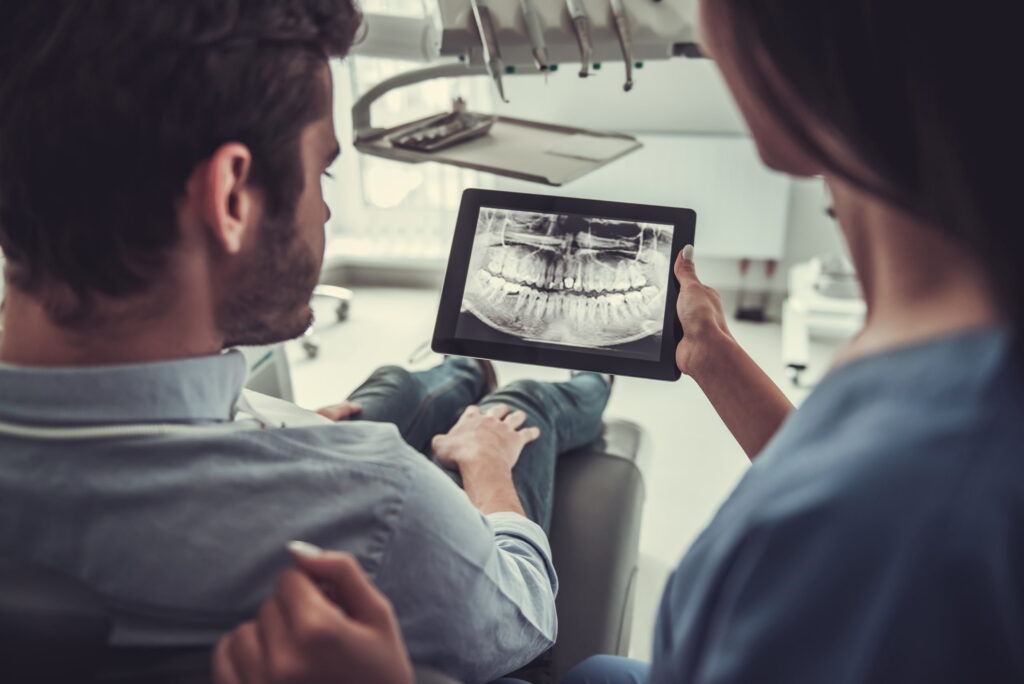
What happens when you get full arch implants?
Full arch treatment happens in stages over several months. Most of the work is done before surgery, so the surgery itself follows a plan.
- Consultation and 3D scan. Dr. Fernandez examines your mouth, reviews your health history and takes a 3D cone beam CT (CBCT) scan in our office. This scan shows your bone in three dimensions. He also takes a digital scan of your teeth and gums, so there is no goopy impression tray.
- Digital planning. The 3D scan is merged with the digital scan of your mouth. Dr. Fernandez uses implant planning software to choose where each implant goes, based on your bone and on where your new teeth need to sit.
- Extractions and grafts, if needed. Teeth that cannot be saved are removed. If bone is thin, a bone graft or sinus lift may be done first or at the same visit. Dr. Fernandez does these in our office.
- Guided implant placement. In most cases, Dr. Fernandez places the implants through a surgical guide made from your digital plan, which helps put each implant where it was planned. When a guide is not practical for your mouth, he will explain why and how he will place them instead.
- Healing. The bone grows around the implants. This is called osseointegration. Healing usually takes about 4 to 6 months, depending on how many implants you have and your overall health. While you heal, you wear a denture that is not attached to the implants. Once they have healed, your final teeth are made and fitted.
- Your final teeth. Once the implants have healed, your overdenture or fixed bridge is made and fitted. Follow-up visits check the fit and your bite.
Can you get teeth the same day? Same-day teeth on new implants are offered here only for select front-tooth cases, and they are not common. For full arch treatment, plan on a healing period before your final teeth, and you wear a denture during that time.
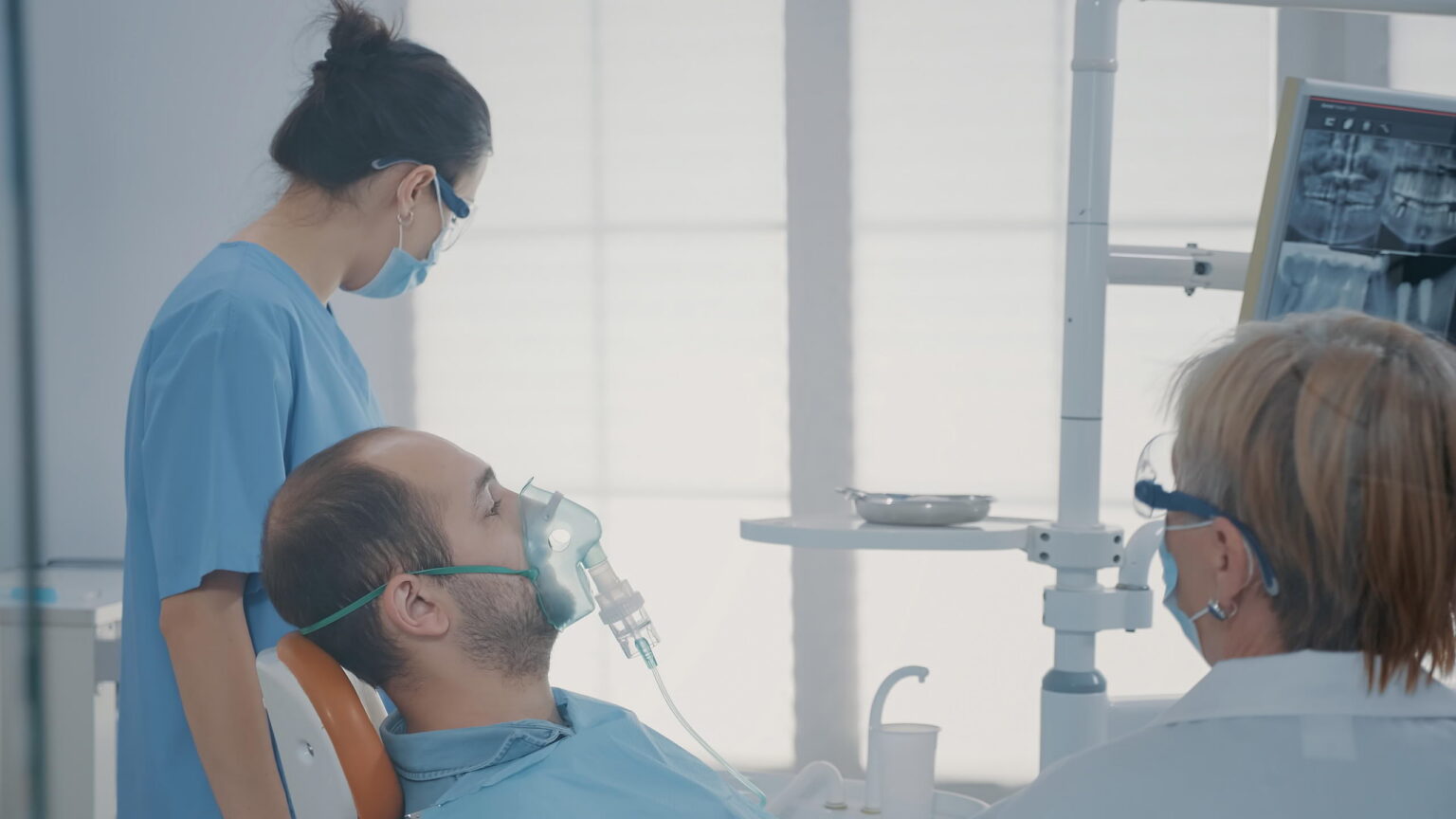
Does full arch implant surgery hurt?
The area is numbed before surgery, so you should feel pressure but not sharp pain. Tell Dr. Fernandez right away if anything feels sharp. He will also tell you what to expect afterward and what to take for discomfort.
If you feel nervous, you can choose from these comfort options:
Nitrous oxide (laughing gas) to take the edge off mild nerves.
Oral anti-anxiety medication, a pill you take at home before your visit to help you relax. Plan for someone to drive you to and from your visit.
IV sedation days. We are adding scheduled IV sedation days with experienced CRNAs (certified registered nurse anesthetists). Ask us about upcoming sedation days so we can plan your surgery around one.
Learn more on our sedation dentistry page.
What is recovery like, and how do you care for implants?
Recovery happens in steps, and Dr. Fernandez gives you instructions after surgery.
The first days. Your dentist may suggest soft foods, cold foods and warm soup while you heal, the ADA says. Follow your instructions for cleaning and medicine.
While the implants heal. Keep your follow-up visits so Dr. Fernandez can check healing. Tell us right away if an implant feels loose or painful, as the FDA advises.
When your new teeth arrive. New teeth often feel awkward for a few weeks while you get used to them, and some minor soreness is common. Follow-up visits fine-tune the fit.
Long-term care keeps your implants healthy:
Clean every day. Implants need daily brushing and cleaning, the American Academy of Periodontology says. An overdenture comes out to be brushed. A fixed bridge needs cleaning around and under it; ask us about the right tools.
Watch your gums. Red or tender gums around an implant, or bleeding when you brush, can be signs of a gum problem around the implant called peri-implantitis. Call us if you see them.
Keep regular checkups. Implants should be checked routinely. Overdenture snap parts wear over time and are replaced when they loosen.
Tell other providers. Let your doctors and imaging staff know you have implants before an MRI or X-ray, as the FDA advises.
What are the risks of full arch implants, and the alternatives?
Implants are surgery, and no one can promise a result. The FDA lists these possible problems, which can happen soon after surgery or much later:
Injury to nearby tissue, such as an opening into the sinus in the upper jaw.
Numbness after surgery if a nerve is pressed on or damaged.
Loose implants from infection, more likely with uncontrolled diabetes, or from slow healing, more likely in people who smoke.
Gum problems around implants. Peri-implantitis causes bone loss around an implant and usually needs surgical treatment, the American Academy of Periodontology says.
Your alternatives:
Conventional full dentures. A removable denture that rests on your gums, with no surgery for implants. See our dental prosthetics page.
Partial dentures. If you still have some healthy teeth, a partial fills the gaps. Also on our dental prosthetics page.
Doing nothing, or keeping your current denture. A loose denture may be relined or remade to improve its fit. If you leave failing teeth in place, ask Dr. Fernandez what that means for your mouth.
Implants for single teeth are covered on our dental implants page.
How much do full mouth dental implants cost in Powdersville?
The cost of full arch implants depends on your treatment plan, and Dr. Fernandez explains it after your consultation and 3D scan. The main cost drivers are:
Overdenture or fixed bridge. A fixed bridge usually costs more, because it involves more surgery.
One jaw or both.
How many implants your plan needs.
Extractions, bone grafts or a sinus lift before or during surgery.
Sedation, if you choose it.
Your teeth during healing and the type of final teeth you choose.
Insurance. We are out of network with all PPO and HMO plans. We still submit claims to your insurance for you, so you do not have to file them yourself.
Financing. We offer CareCredit and Cherry. See our financing page to learn more and apply.
Your implant dentist
Dr. Jonathan Fernandez, DMD
Dr. Fernandez plans, places and restores implants himself, using a 3D scan and a surgical guide in nearly every case. He cares for each patient personally, from the first visit through healing.
Why patients choose Powdersville Dental Associates for full arch implants
One dentist from plan to final teeth. Dr. Fernandez places the implants and also designs and fits the teeth that go on them.
Implant training. He completed the American Academy of Implant Dentistry MaxiCourse in Augusta, Georgia (300 continuing education credits) and passed written and oral exams to become an Associate Fellow of the American Academy of Implant Dentistry.
3D planning in our office. A cone beam CT scan and a digital scan of your mouth are merged to plan each implant, and most surgeries are guided.
Surgery under one roof. Extractions, bone grafts, sinus lifts and implants are done here, without a referral elsewhere.
Comfort choices. Nitrous oxide and oral anti-anxiety medication, with IV sedation days being added.
Personal care after surgery. Dr. Fernandez makes seeing his implant patients a priority when a concern comes up, and you can always reach him through our office while you heal.
We see patients from Powdersville, Piedmont, Easley, Greenville and Pickens. Meet our dentists on the meet the doctors page.
Frequently asked questions
What is the difference between an implant overdenture and a fixed full arch bridge?
An overdenture is a denture that snaps onto implants. You take it out each day to clean it. A fixed full arch bridge is held to the implants and stays in your mouth. Dr. Fernandez removes it only if needed to check your hygiene. An overdenture usually needs fewer implants and costs less. A fixed bridge stays in all the time but takes more surgery.
How many implants will I need?
It depends on your bone, your jaw and which option you choose. A lower overdenture needs at least two implants, and more add support. A fixed bridge generally needs more. Dr. Fernandez sets the number after your 3D scan and digital planning, and explains why.
How long does full arch treatment take?
Plan on several months. After surgery, the bone needs about 4 to 6 months to grow around the implants, depending on how many you have and your overall health. Extractions or bone grafts can add time. Dr. Fernandez gives you a timeline for your case at your consultation.
Can I get new teeth on the same day as surgery?
Same-day teeth on new implants are offered here only for select front-tooth cases, and they are not common. For full arch treatment, expect a healing period of about 4 to 6 months, and you wear a denture while you heal. Ask Dr. Fernandez how you will eat during that time.
Am I too old for full mouth dental implants?
Your health matters more than your age, the American Dental Association says. Conditions such as diabetes, and using tobacco, can slow healing. Dr. Fernandez reviews your health history and your 3D scan to see whether implants are a safe choice for you.
How do I take care of full arch implants?
Clean them every day and keep regular checkups. An overdenture comes out to be brushed, and its snap parts are replaced as they wear. A fixed bridge needs cleaning around and under it. Call us if your gums around an implant turn red, feel tender or bleed.
Does insurance cover full arch dental implants?
Coverage depends on your plan. We are out of network with all PPO and HMO plans, but we submit claims for you. We also offer CareCredit and Cherry financing. Call us to talk through your plan before you start.
What if I am nervous about implant surgery?
You have choices. We offer nitrous oxide and oral anti-anxiety medication, and we are adding IV sedation days with experienced nurse anesthetists. Ask us about upcoming sedation days when you book your consultation.
Book your full arch implant consultation in Powdersville
If you are missing most of your teeth, have teeth that are failing, or are tired of a loose denture, start with a consultation. Dr. Fernandez will take a 3D scan, compare an overdenture and a fixed bridge for your mouth, and explain what drives the cost.
100 Commons Blvd., Piedmont, SC 29673